
What Is SAP People Intelligence? A Guide for SuccessFactors Customers
Nigel Dias · · 5 min read
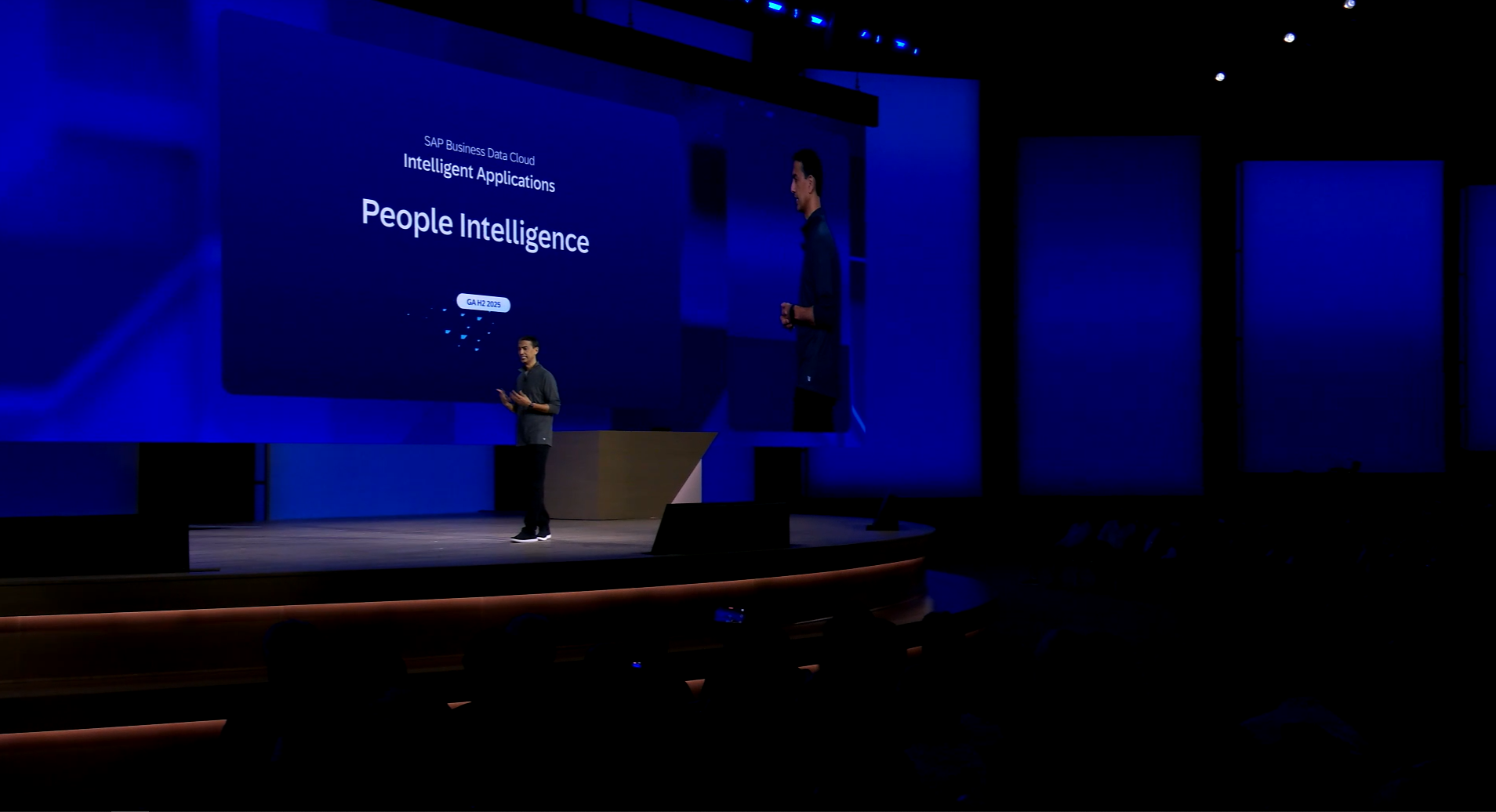
At SAP Sapphire 2025, SAP announced SAP People Intelligence, a new People Analytics solution designed to help organisations get more value from their SAP SuccessFactors workforce data.
Since that announcement, People Intelligence has moved from an emerging product to a generally available solution within SAP Business Data Cloud (BDC), giving SuccessFactors customers a new way to analyse their workforce, access HR insights and support data-driven decision-making.
For organisations already using SAP SuccessFactors Employee Central, Recruiting, Learning and other modules, the opportunity is significant. Much of the information needed to answer important workforce questions already exists within their HR systems. The challenge has often been turning that information into accessible, meaningful insights.
People Intelligence aims to address this challenge by combining prebuilt workforce analytics, trusted HR data and AI-powered capabilities within SAP's broader data and analytics platform.
In this updated guide, we explain what SAP People Intelligence is, how it works, what it can do today and what SuccessFactors customers should consider before getting started.
What Is SAP People Intelligence?
SAP People Intelligence is a People Analytics solution within SAP Business Data Cloud that helps organisations analyse their SAP SuccessFactors data and make better workforce decisions.
The solution brings together workforce, skills and business data, providing prebuilt analytical content, workforce metrics and dashboards that help HR leaders understand their organisation.
Rather than requiring customers to build every report, metric or data model themselves, People Intelligence provides a foundation of SAP-delivered analytical content that can be used to explore workforce trends, risks and opportunities.
For example, People Intelligence can help organisations:
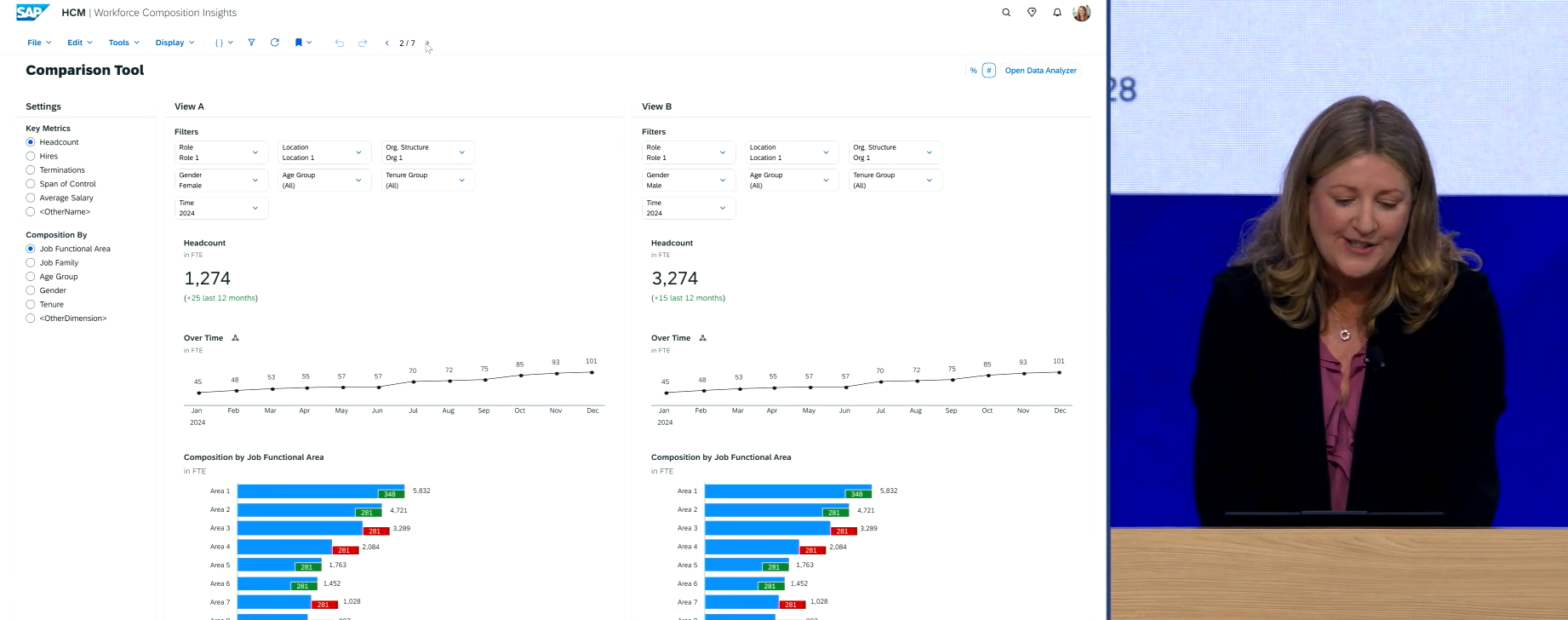
Understand workforce composition: Analyse headcount, employee movement, workforce demographics and organisational changes.
Investigate employee turnover: Explore termination trends, employee departures and the workforce groups most affected.
Analyse skills and capabilities: Identify workforce skills, proficiency levels and potential capability gaps.
Understand compensation: Examine salary distributions, compensation trends and pay equity.
Explore talent processes: Access insights relating to recruitment, learning, succession, performance and career development.
For a CHRO, the value is not simply having access to more HR dashboards. It is being able to answer questions such as "Where are we losing employees?", "Which skills are we missing?" or "How is our workforce changing?" using information already held within SAP SuccessFactors.
People Intelligence is designed to turn SuccessFactors data into answers that help HR leaders make better decisions.
From Workforce Analytics to People Intelligence
For many years, Workforce Analytics helped organisations move beyond basic HR reporting by providing standardised workforce measures, historical analysis and more sophisticated analytical capabilities.
However, the arrival of People Intelligence represents more than a visual upgrade to Workforce Analytics.
It introduces a different technological foundation and a broader approach to how workforce information can be prepared, accessed and analysed.
Some of the most important differences include:
SAP Business Data Cloud: People Intelligence operates within BDC, rather than relying on the traditional Workforce Analytics architecture.
Prebuilt Data Products: SAP provides governed workforce data products and analytical content, reducing the need for customers to develop every analytical foundation independently.
Modern Analytics Experience: People Intelligence provides business-friendly dashboards and analytical experiences, supported by SAP Analytics Cloud technology.
Broader Data Integration: The BDC architecture creates opportunities to connect workforce information with finance, operational and other business data.
AI-Powered Analytics: SAP is extending the experience through Joule, conversational analytics and intelligent recommendations.
For existing WFA customers, this is an important development, but moving to People Intelligence should not be treated as a straightforward technical upgrade.
Organisations will need to review their existing workforce metrics, custom calculations, historical reporting requirements and analytical use cases to understand how these translate into the new environment.
Workforce Analytics remains documented and supported within SAP's existing product landscape, so customers should confirm their contractual position, renewal arrangements and transition options directly with SAP.
For customers who have not previously invested in Workforce Analytics, People Intelligence also presents an opportunity to introduce more sophisticated People Analytics without first implementing the legacy solution.
What SAP Has Said About How It Works
People Intelligence is built on SAP Business Data Cloud, SAP's platform for bringing together, governing and analysing business data across its application landscape.
For SuccessFactors customers, this provides a foundation for making HR information more consistent, accessible and useful.
The solution combines several important components.
1. SAP SuccessFactors Data
Employee Central provides core workforce information, including employees, organisational structures, positions and employment details.
Other SuccessFactors modules can contribute information about recruitment, skills, learning, performance and compensation, depending on the products implemented and the available analytical content.
2. SAP Data Products
People Intelligence uses prebuilt, governed Data Products to organise workforce information into meaningful analytical structures.
These help provide consistent definitions and calculations for workforce measures, reducing the need for organisations to recreate complex data models themselves.
3. Prebuilt Insights and Dashboards
People Intelligence provides ready-to-use analytical content covering important HR topics, including workforce composition, compensation, skills and talent processes.
Users can explore workforce information through dashboards, examine trends and drill into the factors behind particular results.
4. SAP Business Data Cloud
BDC provides the wider data architecture, allowing organisations to connect HR information with other relevant business data.
This is particularly important for organisations that want to understand workforce costs, compare HR and business performance or support more sophisticated workforce planning.
5. SAP Joule and Conversational Analytics
SAP is also extending People Intelligence through Joule and AI-powered analytical capabilities.
The direction is towards allowing HR and business leaders to ask workforce questions in natural language, receive relevant information and explore follow-up questions without needing to navigate multiple reports.
For example, a CHRO could ask:
"Which departments have experienced the highest employee turnover this year?"
And then follow up:
"How does that compare with last year?"
This is an important evolution in how HR leaders interact with workforce information. However, the availability of individual conversational features, agents and recommendations depends on SAP's release schedule, licensing and customer configuration.
What Can SAP People Intelligence Do Today?
When SAP first announced People Intelligence in 2025, much of the discussion centred on its future potential.
Today, the conversation is different.
People Intelligence is generally available, and SAP has continued expanding its prebuilt insights and workforce analytical content throughout 2026.
The solution already provides practical capabilities for analysing workforce information, rather than simply demonstrating a future vision.
Some of the most relevant use cases for SuccessFactors customers include:
Workforce Composition and Employee Movement
Understand how headcount is changing across the organisation, examine hiring and termination trends, and identify where workforce growth or reductions are occurring.
Employee Retention
Explore employee departures, termination reasons and turnover patterns across different workforce groups to identify areas that may require attention.
Skills and Capability Analysis
Analyse available workforce skills, examine proficiency levels and identify potential gaps between current capabilities and business requirements.
Compensation and Pay Equity
Examine compensation distributions, salary metrics and pay differences across employee populations, supporting more informed compensation decisions and pay transparency analysis.
Talent and Development
Access analytical content across recruitment, learning, succession, career development and performance, helping organisations better understand their talent processes and investments.
These capabilities are particularly valuable because they address questions that HR leaders already need to answer.
Rather than building analytical capability solely around the reports that a system can produce, People Intelligence provides an opportunity to start with the workforce decisions that matter to the business.
The objective is not more reporting. It is helping SuccessFactors customers get answers to important workforce questions, faster and with greater confidence.
SAP is continuing to develop the product, including additional analytical content and AI-powered experiences. Customers should distinguish between functionality that is generally available, features requiring specific configuration and capabilities that remain in restricted availability or on SAP's roadmap.
Addressing Historical Limitations
For many SAP SuccessFactors customers, People Analytics has historically been a difficult area to prioritise.
Organisations invest in Employee Central to manage their workforce, Recruiting to attract talent, and Learning to develop employee capabilities.
Analytics and reporting, however, are frequently treated as secondary requirements.
As a result, some organisations have substantial amounts of workforce data within SuccessFactors but continue to rely on Excel, Power BI or manual reporting processes to answer relatively straightforward HR questions.
This can create several challenges.
Workforce metrics may be calculated differently across teams. Reports can take time to produce. HR leaders may struggle to access information without assistance from specialist analysts. And connecting workforce data to broader business outcomes can require significant additional effort.
People Intelligence is designed to address many of these challenges through SAP-delivered data models, consistent workforce metrics and more accessible analytical experiences.
For example, an organisation using Employee Central, Recruiting and Learning may already hold valuable information about employee movement, hiring activity and skills development.
People Intelligence can help make this information more accessible and useful, allowing HR leaders to investigate how these different aspects of their workforce are changing.
However, People Intelligence does not automatically resolve every data quality, reporting or analytical challenge.
Organisations still need to consider data completeness, governance, metric definitions, access permissions and the quality of information held within their SuccessFactors environment.
This is particularly important as SAP introduces more AI-powered analytical capabilities. The quality of the answers will depend on the reliability of the underlying workforce data.
Is SAP People Intelligence Available Now?
Yes. SAP People Intelligence became generally available in October 2025 and has continued to evolve through subsequent SAP releases.
It is available as a separately licensed solution within SAP Business Data Cloud.
However, being generally available does not mean every SuccessFactors customer automatically has access to it.
Organisations will need to consider several requirements before implementation:
Licensing: Confirm the appropriate People Intelligence and SAP Business Data Cloud entitlements.
Technical Readiness: Understand the BDC environment, provisioning requirements and necessary configuration.
SuccessFactors Data: Review which modules and data sources are available to support the required analytical use cases.
Business Requirements: Identify the workforce questions, metrics and insights the organisation wants to prioritise.
Existing Analytics: Assess how People Intelligence fits alongside current reporting, Workforce Analytics and other analytical tools.
For organisations currently using WFA, the assessment should also include existing reporting dependencies, historical data requirements and migration planning.
For organisations new to People Analytics, the priority may instead be understanding which prebuilt People Intelligence capabilities can deliver the greatest immediate business value.
The most important starting point is not whether People Intelligence is available, but whether your organisation is ready to use it effectively.
How 3n Strategy Can Help
At 3n Strategy, we have been helping SAP SuccessFactors customers build meaningful people analytics strategies for over a decade. Our expertise spans the full lifecycle of SAP analytics tools — including Workforce Analytics, SAP Analytics Cloud, and SAP Business Data Cloud.
As the People Intelligence story unfolds, we are actively supporting our clients with analysis, planning, and readiness.
We invite you to take the following steps:
1. Stay Informed
Sign up to our newsletter to receive curated updates on People Intelligence, Business Data Cloud, and related SAP analytics innovations. Subscribe to Newsletter here.
2. Explore the Solution
Speak to 3n Strategy to explore what we know so far, and to review demonstrations based on SAP’s public presentations and roadmap. Request a Call Now.
3. Prepare Your Organisation
Engage with 3n Strategy for a People Intelligence Readiness Assessment, tailored to evaluate your data landscape, analytics use cases, and internal readiness. Assess your People Intelligence Readiness.
Final Remarks
SAP People Intelligence represents an important development in SAP's People Analytics strategy.
What began as a product announcement at Sapphire 2025 is now an available solution, giving SAP SuccessFactors customers new capabilities for analysing workforce information, understanding workforce trends and supporting more data-driven HR decisions.
With SAP continuing to invest in Business Data Cloud, Joule and AI-powered analytics, the opportunities for People Intelligence are also evolving.
But for SuccessFactors customers, the most important consideration remains relatively simple.
Your organisation already holds valuable workforce data within SAP SuccessFactors. The question is whether you are using that data to make better decisions about your people.
People Intelligence offers a new way to bridge that gap.